J.Fisher Interiors · Austin, Texas
Luxurious Bathroom Design Ideas: A Designer’s Guide
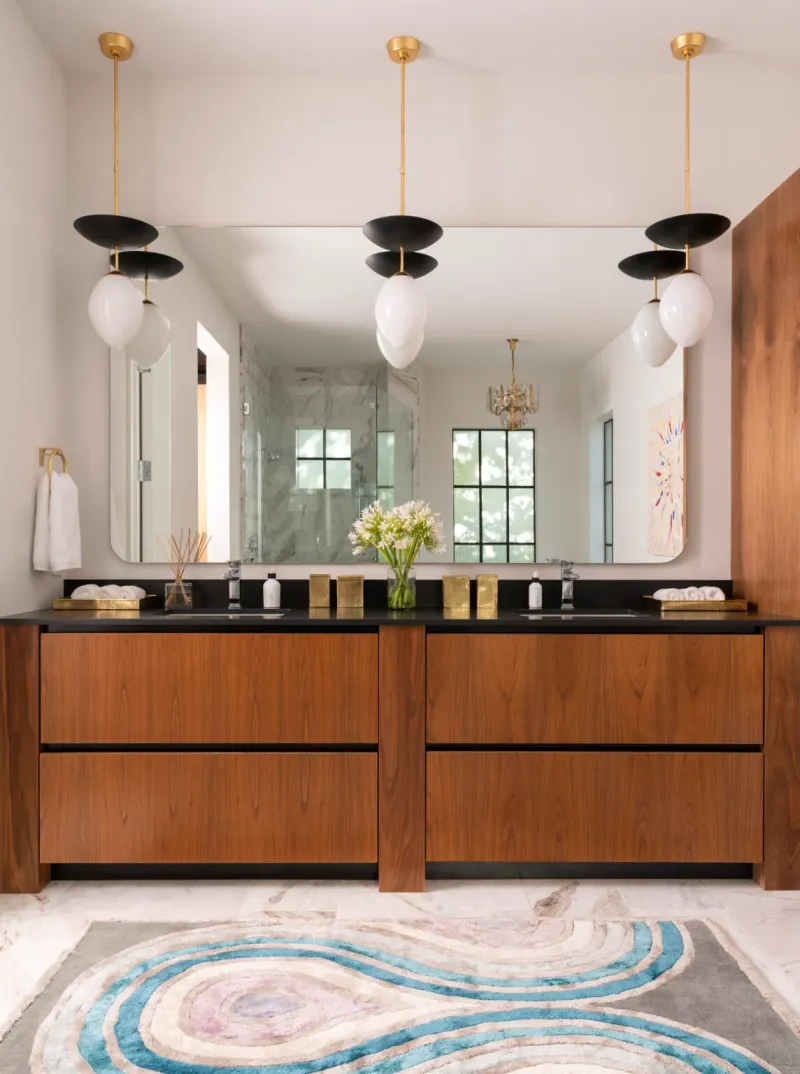
The best luxurious bathroom design ideas begin with how the room will actually be used. Before stone, tile or fixtures are selected, the layout needs to account for movement, privacy, storage, natural light and the relationship between wet and dry areas.
A well-designed bathroom should feel calm and resolved because those decisions have already been made, not because every surface is competing for attention.
Begin With the Experience of the Room
In a primary bathroom, think first about what you see when you enter. A freestanding tub may deserve that focal position, while in another room the vanity or a beautifully detailed shower might carry more visual weight.
Circulation matters just as much. Doors should not collide, pathways should feel generous, and frequently used elements should be easy to reach. In larger bathrooms especially, leaving enough space around key features can make them feel more intentional.
Decide Where the Visual Focus Belongs
Luxury does not have to mean making every element a statement.
One approach might center on dramatic veined stone and sculptural plumbing fixtures. Another might rely on natural oak, softly honed surfaces and warm plaster for a quieter, spa-inspired feel. A more contemporary bathroom could use crisp geometry, restrained hardware and strong architectural lines.
The important thing is hierarchy. If the stone is expressive, the cabinetry and surrounding finishes may need to become quieter, while consistent hardware finishes can help tie the composition together.
Pay Attention to Stone and Tile Details
Material selection is only part of the job. The way those materials are installed can completely change the finished room.
Slab direction, grout spacing, edge profiles, shower niches and transitions between stone, tile and cabinetry should all be resolved deliberately. Even a beautiful material can lose impact when cuts feel arbitrary or joints interrupt an important visual line.
When developing luxurious bathroom design ideas, designers often spend as much time on these junctions as they do choosing the materials themselves.
Give the Vanity Enough Design Weight
A vanity frequently occupies more visual space than any other element in the bathroom, so it deserves to be treated as a complete composition.
Cabinet proportions, counter thickness, mirror size, hardware placement and lighting all need to relate. Custom cabinetry can also make room for the way the homeowner actually uses the space, from electrical outlets inside drawers to storage designed around specific daily routines.
Plan Lighting Around the Mirror
Bathroom lighting should support both function and atmosphere.
Lighting at or around face level is generally more flattering and useful than relying entirely on ceiling downlights. Color temperature also affects how stone, wood, metal and skin tones appear, so fixtures should be considered alongside the material palette rather than added after it.
Invest in the Details You Use Every Day
In high-end bathroom design, investment is often most noticeable in the elements touched and used repeatedly: well-made hardware, quality plumbing fixtures, custom storage, carefully fabricated stone and precise installation.
J.Fisher approaches bathroom interior design as part of the wider architecture and material language of the home.
The strongest luxurious bathroom design ideas are not tied to one aesthetic. They come from resolving layout, materials, focal points, lighting and detailing so the finished room feels personal, comfortable and considered.