J.Fisher Interiors · Austin, Texas
Luxury Home Decor: The Principles Interior Designers Actually Use
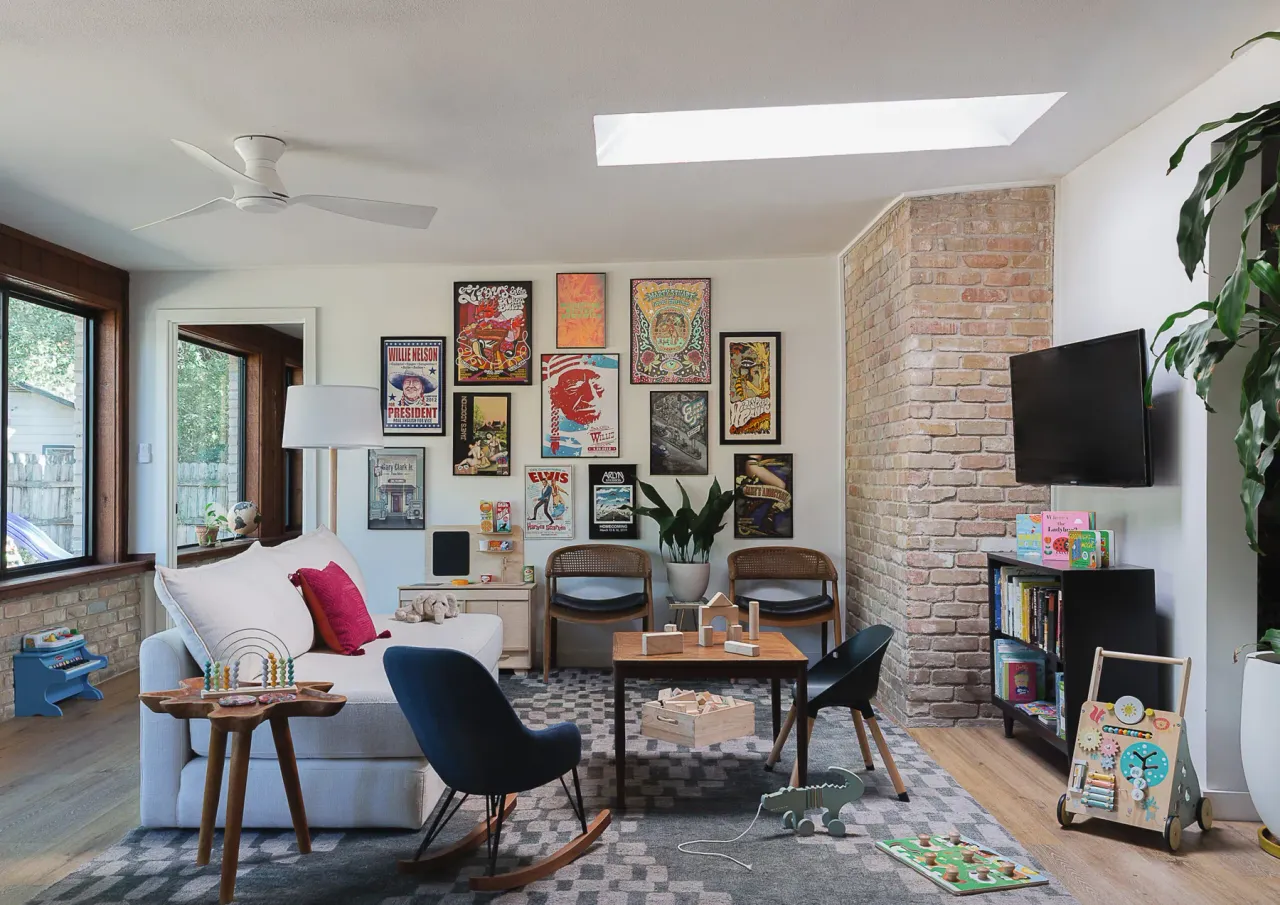
Luxury home decor is rarely about adding more. In a well-designed home, the sense of luxury comes from how the elements relate: the scale of the furniture, the quality of the materials, the way light moves through the rooms, and the restraint to leave something out when it does not earn its place.
At J.Fisher, we think about luxury as a complete design language rather than a collection of expensive objects. A statement sofa or dramatic fixture can be beautiful, but neither can compensate for poor proportions, awkward circulation or rooms that feel disconnected from one another.
Start With Proportion and Scale
One of the most common mistakes is choosing individual pieces before considering the room as a whole. A designer will typically begin with dimensions, circulation, sightlines and the relationship between furniture and architecture.
In a living room, that might mean making sure a rug properly grounds the seating plan and that a coffee table has enough presence beside a generous sectional. In a bedroom, the bed, nightstands, lighting and artwork should feel balanced rather than assembled piece by piece.
Let Material Quality Do the Work
The strongest interiors do not need every surface to compete for attention. Natural stone, beautifully grained wood, tactile upholstery, substantial hardware and carefully executed millwork can create depth through material quality alone.
Designers rarely evaluate a finish in isolation. A stone chosen for a kitchen island, for example, has to sit comfortably beside cabinetry, flooring, metal finishes and the natural light in the room. In a bathroom, the same thinking applies to vanity materials, tile and fixtures.
Bespoke elements matter for the same reason. Custom cabinetry, built-ins, furniture or upholstery can respond directly to a room’s proportions instead of forcing the room to accommodate a standard piece.
Use Color With Restraint
A successful color palette is less about following a trend than understanding how colors behave together and under changing light. This is particularly important in Austin, where strong natural light can alter the appearance of paint, stone, wood and textiles throughout the day.
The most refined luxury home decor often uses a disciplined palette with enough tonal and textural variation to prevent it from feeling flat. Color can also connect spaces without making every room look the same.
For more on this part of the design process, explore J.Fisher’s guide to color in interior design.
Layer Rather Than Fill
Artwork, books, textiles and collected objects give a home character, but layered should never mean crowded. The key is deciding which pieces deserve emphasis and allowing enough space around them to register.
A home feels more personal when objects appear to have been collected because they matter, rather than selected simply because they match.
Treat Lighting as Part of the Architecture
Lighting should be considered early, particularly in a renovation or custom build. Designers work with architectural lighting, decorative fixtures, sconces and lamps so that a room can function differently throughout the day.
Kitchen task lighting has a different job from a bedside lamp, just as bathroom lighting must balance practicality with atmosphere.
Think Beyond Individual Rooms
The clearest difference between decorating a room and designing a home is cohesion. A kitchen can be more architectural than a bedroom, and a bathroom can introduce a different material, without either feeling unrelated to the rest of the house.
J.Fisher’s full-home interior design approach considers proportion, materials, lighting, furnishings and architectural details together so the entire home feels intentional without becoming repetitive.
For homeowners planning a substantial renovation, custom build or complete furnishing project, explore J.Fisher’s residential interior design services or get in touch to discuss your home.