J.Fisher Interiors · Austin, Texas
Luxury Living Room Design: A Designer’s Guide to Getting It Right
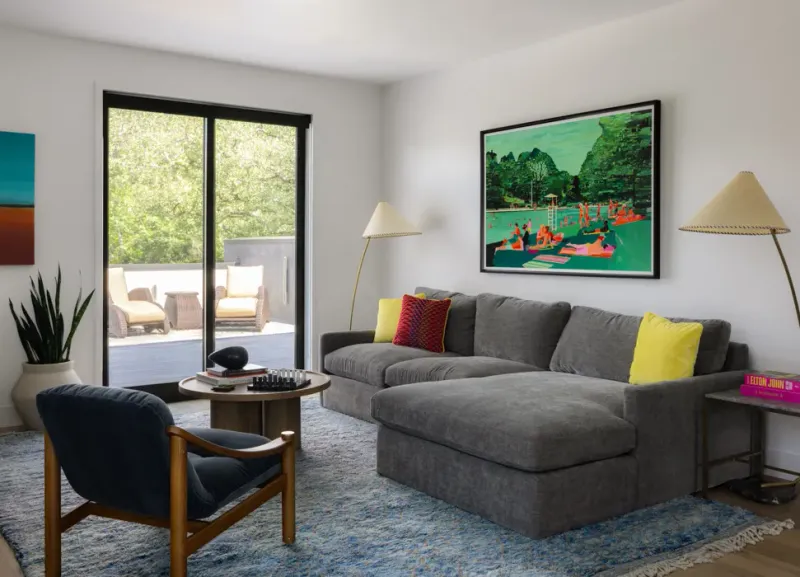
Luxury living room design is not defined by the price of the furniture in it. What matters more is how the room works: where people naturally gather, what draws the eye when you enter, how technology is integrated and how the space relates to the rest of the home.
At J.Fisher, we treat the living room as one of the home’s key social spaces. It should feel considered and refined, but never so staged that nobody wants to sit down.
Start With the Room’s Real Center
Most living rooms have several potential focal points: a fireplace, television, view, significant artwork or architectural feature.
Trying to give each one equal weight can make the room feel unresolved. We first determine what should lead visually, then shape the living room layout around it.
If the view matters, seating should acknowledge it. If a television is used every day, it should be integrated deliberately rather than treated as an afterthought. Artwork may also influence wall proportions, lighting and furniture placement from the beginning.
Design the Seating for People, Not the Perimeter
Large living rooms can become surprisingly uncomfortable when furniture is pushed against the walls.
Bringing sofas and chairs inward creates a defined conversation area while leaving clearer circulation around it. Rugs, occasional tables and lighting can then reinforce the arrangement.
When planning seating, we consider:
- How many people need to sit comfortably?
- Are side and occasional tables within natural reach?
- Can someone cross the room without interrupting a conversation?
- Does the arrangement still work when only one or two people are using the space?
These decisions determine how well the room works when people gather.
Resolve Technology Early
Televisions, speakers, charging points and other technology belong in real living rooms.
The key is planning for them early. Depending on the room, that may involve custom millwork, concealed wiring, carefully positioned outlets, integrated speakers or a darker surface that reduces the visual dominance of a screen.
Through our living room interior design work, we consider technology alongside sightlines, furniture, architectural details and lighting so it becomes part of the design rather than something added afterward.
Think About How the Room Sounds
High ceilings, expansive glazing, stone and hard flooring can create striking architectural volume, but they may also introduce unwanted echo.
Upholstered furniture, rugs, drapery and other soft materials help absorb sound while adding warmth and tactile contrast. This becomes particularly important in open-plan homes, where sound can travel easily between living, kitchen and dining areas.
Acoustics may not be the first consideration in a design scheme, but they can make a noticeable difference to how comfortable the room feels in use.
Give Art and Objects Space
A living room does not need every wall or tabletop filled.
A significant painting often has more impact when it has enough visual space around it. The same applies to sculpture, vintage furniture or collected objects. We consider scale, sightlines and lighting so important pieces can hold their own without competing with one another.
Leaving space around them gives each piece more presence and prevents multiple focal points from weakening the composition.
Connect the Living Room to the Rest of the Home
A living room can have a distinct personality without feeling isolated from adjoining spaces.
Sightlines, flooring transitions, architectural detailing and material cues all help establish continuity. That does not mean repeating the same finishes from room to room. A subtler relationship through proportion, tone or texture often creates a more sophisticated result.
Within a full home interior design project, we can consider those relationships across the property. Our broader residential interior design work also allows furniture, lighting, architectural elements and everyday function to be resolved together.
The best luxury living room design feels effortless because the difficult decisions have already been made: where people sit, what they look toward, how they move through the room and how each element contributes to the wider home.