J.Fisher Interiors · Austin, Texas
Small Luxury Bathroom Ideas That Make the Space Feel Bigger
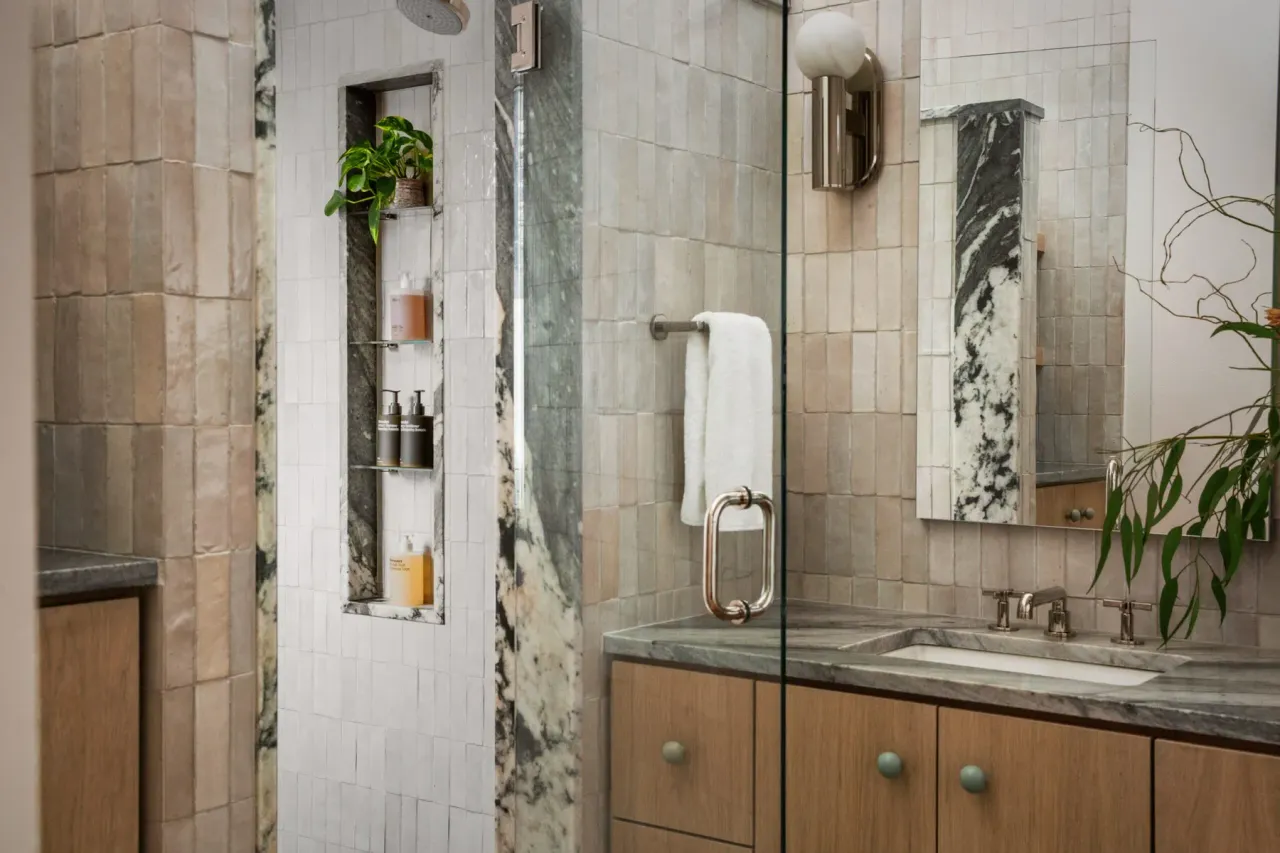
A limited footprint does not prevent a bathroom from feeling high-end. In fact, luxurious small bathroom design depends even more on discipline because every surface, fixture and junction is visible at close range. The goal is not to make the room imitate a larger bathroom, but to reduce unnecessary visual interruptions so it feels calm, generous and intentional.
Keep the Sightlines Clean
In a compact bathroom, what you see from the doorway matters immediately. Bulky cabinetry, heavy shower framing or too many contrasting finishes can make the room feel much smaller than it actually is.
A clear glass shower screen is often more effective than an opaque enclosure because the eye can continue through the room. Wall-mounted faucets, streamlined fittings and a floating vanity can have a similar effect by exposing more wall or floor.
That visual continuity is one of the most useful principles behind small elegant bathroom designs.
Do Not Automatically Choose Smaller Materials
One of the easiest mistakes is assuming that a small bathroom requires small-format tile. Numerous grout lines can divide surfaces into smaller sections and create additional visual noise.
Large-format stone or tile can work particularly well when the layout allows it. Fewer joints create broader, more continuous planes, while carefully aligned grout lines help walls and floors feel deliberate rather than fragmented.
For luxurious small bathroom design, precision at corners, niches and material transitions often matters more than the size of the room itself.
Make Storage Disappear Into the Design
Clutter has a disproportionate effect in a compact space. Rather than adding several freestanding storage pieces, a designer will look for opportunities to integrate storage into the architecture.
A vanity can incorporate deep drawers and internal electrical outlets, while a mirrored cabinet can add storage without introducing another prominent element. Recessed shower niches should also be positioned around tile or stone dimensions rather than appearing as an afterthought.
Use Color, Reflection and Light Strategically
A generous mirror can expand the visual field and move natural or artificial light deeper into the room. Extending it beyond the exact width of a basin can also prevent the vanity area from feeling boxed in.
Tonal continuity helps as well. Keeping walls, stone and cabinetry within a related color family reduces hard visual breaks, although that does not mean a small bathroom has to be pale or neutral.
Well-positioned sconces or integrated mirror lighting can then provide useful illumination without relying entirely on overhead fixtures.
Choose Fewer, Stronger Materials
A small bathroom does not need a long list of finishes to feel luxurious. It often benefits from the opposite approach.
Because less material is required overall, a distinctive stone, beautifully crafted vanity or special metal finish can become the focus without overwhelming the room. The surrounding palette can stay quieter so that feature has room to register.
Too many tile patterns, competing metals or an unnecessary number of fixtures quickly create visual clutter, no matter how attractive each element is on its own.
J.Fisher’s bathroom interior design approach considers layout, storage, materials and lighting together rather than treating them as separate decisions.
The most successful small luxury bathrooms feel spacious because the design has been edited carefully. Clear sightlines, integrated storage, continuous materials and a few well-chosen details allow the room to feel refined without asking limited square footage to do too much.