J.Fisher Interiors · Austin, Texas
What Actually Makes Interior Design Luxury? A Designer Separates Price Tags from True Craft
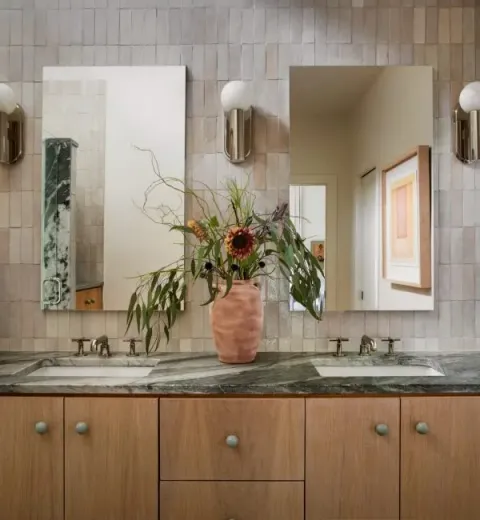
Table of Contents
Ask ten people to define luxury interior design and you’ll likely get ten answers about money: imported marble, designer furniture, a five-figure chandelier. But after more than twenty years of designing high-end homes, we’ve learned that a big budget and true luxury are not the same thing. A room can be extraordinarily expensive and still feel hollow, and a thoughtfully designed space can feel deeply luxurious without a single ostentatious price tag.
So what actually separates luxury from merely expensive? At J.Fisher Interiors, our approach to luxury interior design is built on a simple conviction: luxury is a feeling produced by craft, restraint, and intention, not by how much you spend. If you want the fuller philosophy behind that, we’ve written about what luxury home design really means, but this piece focuses on the concrete details that make the difference. Below, we break down the elements that genuinely elevate a space.
Get in touchLuxury Is Craftsmanship, Not Cost
The single biggest misconception about luxury design is that it’s a shopping exercise, that you achieve it by buying the most expensive version of everything. In reality, the most luxurious rooms are defined by how well things are made and how precisely they’re executed, not by their sticker price.
Consider joinery. A mass-produced cabinet and a custom, hand-built one might both be “wood cabinets,” but the custom piece has drawers that close with a whisper, grain that runs continuously across the doors, and hardware set at exactly the right height for the way you live. That level of resolution is what the eye reads as luxury, even when it can’t name why. Craftsmanship is felt before it’s understood.
This is why true luxury often costs more, not because the materials are flashier, but because skilled makers, precise installation, and uncompromising quality control take time. The value lives in the execution.
The Details That Separate a $50k Room From a $500k Room
If you walked through two beautifully furnished living rooms, the differences that matter most would be almost invisible at first glance. Luxury lives in the details that reward a second look:
Proportion and Scale
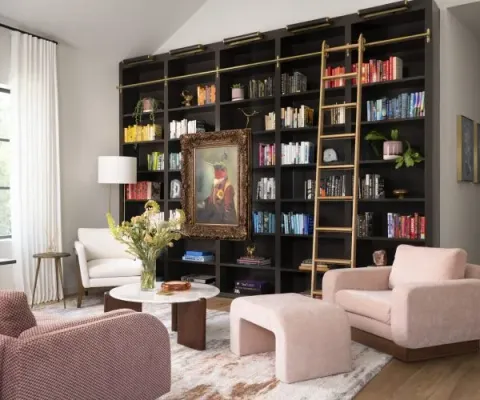
In a luxury room, every element is sized in relation to the architecture and to the other pieces. Ceilings, furniture, art, and lighting are in conversation. Get proportion wrong and no amount of expensive furniture will save the room.
Millwork and Transitions
How a wall meets the ceiling, how one flooring material passes into another, how a door casing is profiled, these transitions are where craft either shows up or disappears.
Hardware and Fixtures
The weight of a door handle, the finish on a faucet, the way a drawer glides. Tactile quality is a hallmark of luxury because you experience it with your hands, every day.
Lighting Layers
A luxurious space is never lit by a single overhead source. It’s layered, ambient, task, and accent, often on dimmers, tuned to flatter both the room and the people in it.
Considered Negative Space
Knowing what to leave out is as important as what to include. Restraint reads as confidence.
None of these are about spending more for its own sake. They’re about spending deliberately on the things that shape how a room feels.
Materials You Can Feel
Luxury materials aren’t necessarily the rarest ones, they’re the ones with integrity. Natural stone with real depth and movement. Solid hardwoods rather than veneers over particleboard. Textiles like wool, linen, leather, and velvet that age gracefully and develop character over years of use.
Part of what makes these materials feel luxurious is their honesty: they’re what they appear to be. And increasingly, luxury and responsibility go hand in hand. Many of our clients now expect low-VOC finishes, responsibly sourced woods, and durable textiles that won’t need replacing in five years. Longevity is its own form of luxury, and its own form of sustainability.
Personalization Is the Real Status Symbol
Here’s the quiet truth of high-end design: the most luxurious homes don’t look like anyone else’s. Anyone with a budget can buy a recognizable designer sofa. What can’t be bought off a shelf is a home that reflects the specific people who live in it, their history, their routines, the way they actually want to move through their days.
True luxury design is bespoke by nature. It considers how you entertain, where the morning light falls, which heirlooms deserve pride of place, and how a space should make you feel when you walk in after a long day. That’s why our luxury interior design process begins with deep discovery long before we talk about furniture or finishes. The goal isn’t to impose a look, it’s to translate a life into a space. As our studio philosophy puts it, every space deserves a soul.
Function Is Non-Negotiable
A space that looks stunning in photographs but frustrates you daily is not luxurious, it’s a set. Genuine luxury is effortless to live in. Storage is generous and intelligently placed. Traffic flows naturally. Technology is integrated and concealed rather than bolted on. Kitchens are built around how you actually cook; bathrooms feel like retreats.
This marriage of beauty and function is the hardest part of the craft, and it’s where an experienced designer earns their fee. You can see it across our portfolio of Austin homes, from a refined downtown loft to the elevated residences at Austin Proper, where the most beautiful spaces are also the most livable.
So, Is Luxury Design Worth It?
If luxury simply meant “expensive,” the answer would be a matter of budget. But because luxury is really about craftsmanship, longevity, personalization, and how a home makes you feel, the value proposition is different. You’re investing in spaces that will still feel considered and current in fifteen years, made from materials that improve with age, tailored to no one but you.
That investment does come with a real cost, and it helps to go in informed, we’ve broken down what hiring an interior designer in Austin actually costs so you can plan with clear expectations. Whether you’re building from the ground up, reimagining a single room, or working with us through a remote design consultation, the principles are the same: buy less, but buy better, and let craft carry the room.
Ready to create a home that feels genuinely, personally luxurious? Get in touch with our Austin studio to start the conversation.