J.Fisher Interiors · Austin, Texas
High End Home Decoration, A Designer’s Guide
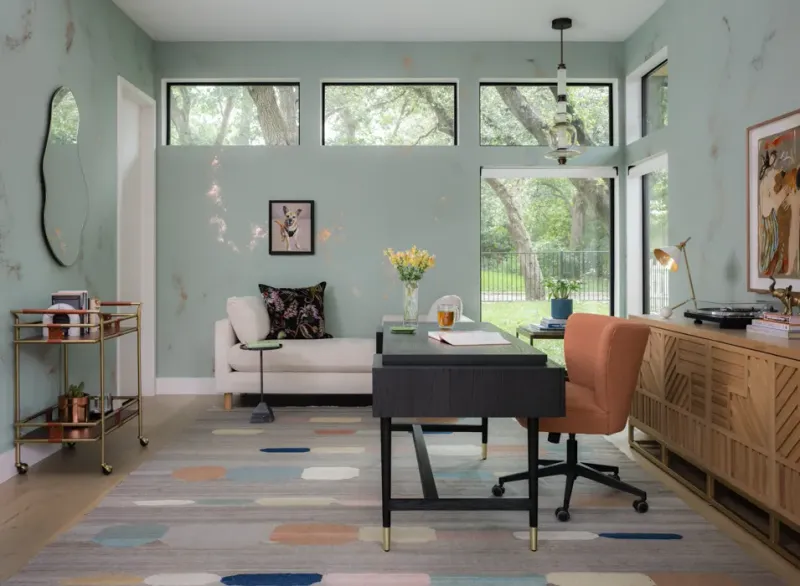
Most advice on high end home decoration is really advice on shopping. Buy the marble, buy the brass, buy the oversized vase. After two decades designing homes in Austin, I can tell you that none of it works on its own. A room full of expensive objects reads as expensive. It does not necessarily read as considered, and considered is what you are actually after.
Here is how high end decor is really built.
Decide What the Room Is For Before You Decorate It
The most common mistake I see is decorating a room before deciding how it will be used. A living room arranged around a television behaves differently from one arranged around conversation, and no amount of styling fixes a layout that fights the household.
Start with furniture placement, circulation and the seat you will actually sit in most evenings. Everything decorative comes after that, and the decisions get easier once the room has a job.
Modern Luxury Home Decor Depends on Restraint
Modern luxury home decor is defined more by what is left out than by what is added. A console with three well chosen objects on it looks expensive. The same console with eleven looks like a shop display.
Restraint also buys you focus. One generous piece of art will do more for a room than four small ones competing for the same wall, and a single sculptural lamp beats a pair of forgettable ones. When you cut the number of decisions in a room, each remaining decision has to be good, which is exactly the discipline that produces a high end result.
Materials Carry the Room
Objects date. Materials do not, which is why they deserve the larger share of your attention and your budget.
Natural stone with genuine depth and movement, solid hardwood rather than veneer over particleboard, wool and linen and leather that soften with use. These read as high end because they are honest, they are what they appear to be, and they improve rather than deteriorate over a decade. A room with three real materials in it will outperform a room with twelve synthetic approximations of them.
This is also where longevity and sustainability stop being separate conversations. Textiles you are not replacing in five years are both the more luxurious and the more responsible choice.
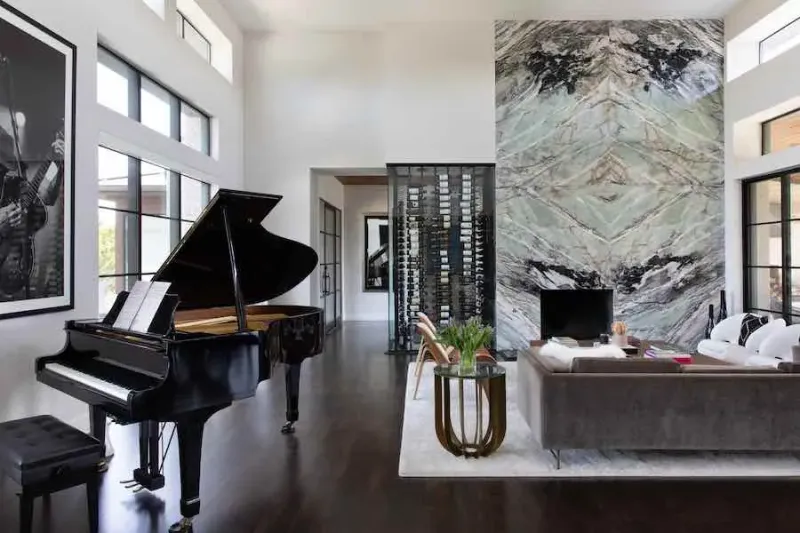
Layer the Light Before You Layer the Objects
Lighting is the single most undervalued element in home decor, and the fastest way to make an otherwise well decorated room feel cheap is to light it from one fixture in the middle of the ceiling.
Work in three layers. Ambient light to set the overall level, task light where people read and cook and work, and accent light to pick out art, texture and architecture. Put as much of it on dimmers as you can. A room you can take from bright on a weekday morning to low and warm on a Friday evening is doing something no decorative object can do for you.
For color decisions that support all of this, my go to luxury paint colors covers the palettes I return to.
Make the Room Specifically Yours
The most luxurious homes I have worked on do not look like anyone else’s. Anyone with a budget can buy a recognizable designer piece. What cannot be bought is a room that reflects the particular people in it.
Art you chose because you wanted to look at it. A piece inherited from a grandparent given proper prominence rather than tucked in a hallway. Objects collected on trips that mean something. These are what stop a beautifully finished room from feeling like a hotel suite, and they are the part no catalogue can supply.
Four Mistakes That Give Budget Away
Everything at the same height. Vary scale deliberately. A room where every object sits between eight and twelve inches tall reads as flat.
Rugs that are too small. The most common and most expensive looking error to fix. The front legs of your seating should sit on the rug at minimum.
Matching sets. A suite bought together announces itself. Mix periods, woods and finishes with intent.
Nothing left empty. Negative space is not wasted space. It is what lets the good pieces register.
If you want the longer version of the argument behind all of this, I have written about what actually makes interior design luxury, and our guide to where to save and where to spend covers how to allocate a real budget across a room.
Decorating a Whole Home
Decorating room by room is how most homes end up feeling disconnected. If you are furnishing a whole property, the palette, materials and lighting approach need to carry between rooms even as each one changes character.
That is the work we do at J.Fisher Interiors. See our portfolio of Austin homes for how it reads across a full house, or our luxury residential interior design service if you would like help with yours. Get in touch to start a conversation.